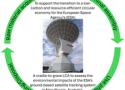
The transition to a low-carbon and resource-efficient circular economy is a political pillar of the EU and a priority for space agencies. Indeed, the space industry is pursuing sustainable development practices to reduce the environmental impacts. Life Cycle Assessment (LCA) is internationally recognized as

La crise de production de semi-conducteurs de 2021 a donné à voir le rôle que joue Taiwan dans l’économie globale et dans la production de composants électroniques avancés ...
Can artificial intelligence really enrich fossil-fuel companies and fight climate change at the same time? The tech giant says yes.
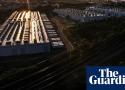
Emissions from in-house data centers of Google, Microsoft, Meta and Apple may be 7.62 times higher than official figures

Publication des études de veille réalisées dans le cadre du marché de support logiciel libre piloté par la DGFiP, marché au bénéfice de l'ensemble des ministères.

À Marseille, les data centers consomment du terrain et beaucoup d’énergie | Alternatives Economiques
L’entreprise américaine Digital Realty veut construire son cinquième centre de données en plein cœur de la ville. Un collectif d’habitants s’y oppose et dénonce un impact fiscal, urbain et environnemental néfaste.

Gauthier Roussilhe est doctorant au RMIT. Il étudie la façon dont nos pratiques numériques se modifient dans le cadre de la crise environnementale planétaire en proposant une vision systémique, de l'extraction des matières à la fin de vie, et des infrastructures à l'usage des services numériques. Antoine Rousseau & Ikram Chraibi Kaadoud On pourrait penser … <p class="link-more"><a href="https://www.lemonde.fr/blog/binaire/2024/04/12/ce-quon-sait-et-ce-quon-ne-sait-pas-sur-les-effets-environnementaux-de-la-numerisation/" class="more-link">Continuer la lecture<span class="screen-reader-text"> de « Ce qu’on sait et ce qu’on ne sait pas sur les effets environnementaux de la numérisation »</span></a></p>

Explorer les écosystème numériques possibles dans un monde soutenable.
Looker Studio turns your data into informative dashboards and reports that are easy to read, easy to share, and fully customizable.